
How 3D Printing
Is Changing
The Game
For Cyclists
From carbon-infused PLA components that rival traditional manufacturing to personality-packed printed accessories built for your bike room — additive manufacturing is reshaping cycling at every level.
Cycling Meets the Print Bed
Cycling has always been a sport obsessed with materials. Chromoly steel gave way to aluminum, aluminum gave way to titanium, titanium gave way to carbon fiber. Every generation of the sport has been shaped by what its components are made of and how they're made. 3D printing is the next chapter — and it is already here.
Additive manufacturing's impact on cycling runs across a spectrum: at the top end, it is transforming how full bicycle frames are designed and produced, enabling geometries that would require prohibitively expensive tooling through conventional carbon layup. In the middle, it is giving individual riders and small brands the ability to produce custom mounts, brackets, ergonomic grips, and body-specific saddle pads without manufacturing minimums. At the everyday level — where most of us live — it is producing accessories that are smarter, more personal, and more functional than what injection molding can offer at the same price point.
The material at the center of much of this activity is carbon-infused PLA — a composite filament that combines the printability and accessibility of PLA with the stiffness, dimensional stability, and weight characteristics that chopped carbon fiber brings. It is not a replacement for structural continuous-fiber carbon in safety-critical applications, but it has opened up a new category of functional, performance-adjacent parts that was not economically viable before desktop 3D printing reached its current level of capability.
This piece covers both ends of that spectrum: the serious technical advances happening at the frame and component level, and the community-driven accessory culture that is making cycling spaces more organized, more personalized, and more fun. Including one very specific accessory that we think every cyclist's garage or bike room should have.
Carbon-Infused PLA:
What It Actually Is
Before getting into applications, it is worth understanding what carbon-infused PLA actually is — because it is frequently misunderstood, both overhyped and underestimated, sometimes in the same conversation.
Carbon fiber PLA (often labeled PLA-CF) is a composite filament made by blending chopped short-strand carbon fiber into a PLA base. The carbon fiber strands are small — typically around 0.01mm in diameter — and are distributed throughout the filament. When the filament is extruded by the printer, the carbon fiber particles align along the print direction, reinforcing the part along that axis.
This is meaningfully different from continuous fiber printing (used by systems like Markforged), where long, unbroken strands of carbon fiber are laid down alongside a thermoplastic matrix. Continuous fiber printing produces parts with metal-like strength that can replace aluminum components. Carbon-infused PLA is not in that league — but it is substantially better than plain PLA in the ways that matter most for cycling accessories and functional parts.
- Significantly stiffer than plain PLA — better resistance to flex under load
- More dimensionally stable — less warping during and after printing
- Higher stiffness-to-weight ratio than standard PLA
- Matte black finish that hides layer lines for a premium appearance
- Prints at similar temperatures to standard PLA — accessible on most FDM printers
- Better surface quality and less visible layer texture than plain PLA
- More abrasive than standard PLA — requires hardened steel nozzle (0.4mm minimum, 0.6mm recommended)
- Not suitable for load-bearing safety components — not a substitute for structural carbon layup
- Chopped fibers provide isotropic reinforcement, not the directional strength of continuous fiber
- Somewhat more brittle than plain PLA in impact scenarios
- Higher cost per kilogram than standard PLA filament
- Can clog brass nozzles — verify nozzle material before printing
For cycling applications — mounts, brackets, cable guides, handlebar accessories, gear storage, and decorative functional items — carbon PLA hits a genuinely useful performance envelope. It is stiffer than regular PLA, lighter-feeling in the hand, and presents with a surface finish that reads as premium. For riders who care about how their setup looks as well as how it functions, it is the natural choice for 3D printed components.
"Carbon fiber 3D printing materials offer improved stiffness and dimensional stability — with a matte black finish that hides layer lines."
The print settings that get the best results from carbon PLA: slow down compared to standard PLA (30–45mm/s), use a hardened steel 0.6mm nozzle, dry the filament before use (carbon PLA can absorb moisture faster than standard PLA), and reduce cooling fans to about 50% to improve layer adhesion. Wall count matters more with carbon PLA than with standard filament — four to six perimeters are recommended for functional parts where you want the carbon fiber reinforcement to be consistent through the part thickness.
Eight Ways 3D Printing
Is Advancing Cycling
Arevo — a Silicon Valley-based startup — developed what is described as the world's first fully 3D-printed continuous fiber bicycle frame using a robotic arm that deposits carbon fiber filaments in precisely optimized orientations. Unlike traditional carbon frame manufacturing that requires expensive handmade molds costing $60,000–$100,000 each, the additive process creates the frame directly from a digital model. The result: a fully 3D-printed composite frame at a fraction of traditional manufacturing cost, with the ability to optimize fiber orientation at every point in the structure. The carbon fiber bike market that this technology is entering grew from $3.24 billion in 2023 to $3.49 billion in 2024 and is expected to reach $5.45 billion by 2030.
Continuous Carbon FiberCzech company Posedla produces 3D-printed saddles through its Joyseat platform, combining a carbon shell with a 3D-printed TPU padding layer. An online configurator collects rider-specific parameters — sit bone width, weight, riding style, flexibility — and uses them to specify a saddle designed for that individual's anatomy. The saddle weighs between 170 and 210 grams depending on rider parameters. This represents something that injection molding fundamentally cannot offer at a commercial price point: genuine, meaningful customization of a component that directly interfaces with the rider's body every time they ride.
TPU + Carbon ShellThis is where the community-level 3D printing revolution is most immediately visible. Repositories like Printables and Thingiverse contain thousands of designs for handlebar mounts — Garmin and Wahoo GPS units, GoPro cameras, top-tube bags, lights, mirrors, and every permissible combination of the above. Carbon PLA is the material of choice for most of these: stiffer than regular PLA under vibration, with better dimensional stability to maintain tight fits on clamping systems. A custom mount designed to fit a specific stem and hold a specific device model can be designed, printed, and riding within 24 hours.
Carbon PLA — Most Popular ChoiceGerman startup Personomic offers 3D-printed, custom-made grips designed to prevent hand pain on long rides. Hand pain and numbness on extended climbs or rides is a common complaint among cyclists — and it is caused by the mismatch between standard grip geometry and individual hand anatomy. 3D scanning of the rider's hand, combined with additive manufacturing, enables grips that distribute pressure in a biomechanically appropriate pattern for that individual. This application is particularly compelling for adaptive cycling, where standard grip geometry may be entirely unsuitable for a rider's specific needs.
Custom TPU / NylonAnisoprint demonstrated a continuous fiber 3D-printed lightweight bicycle handlebar — a component type that, in conventional manufacturing, is almost exclusively produced from aluminum extrusion or carbon fiber tube and cap construction. The printed handlebar achieved mechanical properties competitive with conventionally manufactured equivalents, at lower weight and with geometric freedom that conventional processes cannot easily achieve. This type of research points toward a future where high-performance structural components can be customized for individual rider position requirements rather than selected from a catalog of standard sizes.
Continuous Fiber 3D PrintingCycling has a long tail of vintage and specialty bikes where parts have been discontinued and replacements simply do not exist. 3D printing has become the de facto solution for this category: derailleurs, cable guides, cleat adapters, fender brackets, derailleur hanger adapters, and countless other small components have been printed from community-shared designs when the original manufacturer no longer offers them. For cyclists who restore vintage road bikes or run unusual framesets, 3D printing has effectively extended the serviceable life of hardware that would otherwise be retired.
PLA / PETG / Carbon PLAFrom custom trainer frames to sensor mounts for power meter calibration rigs, 3D printing has enabled cyclists and coaches to build bespoke testing and training infrastructure at a fraction of what equivalent commercial products would cost. Carbon PLA's stiffness is particularly valuable here — trainer mounts subject to repetitive vibration cycles benefit from a stiffer material than standard PLA. The ability to iterate quickly means that a poorly fitting adapter can be redesigned and reprinted in an evening.
Carbon PLAThis is the category closest to home for most riders — and the one where 3D printing's combination of low cost, high customization, and good-looking finish translates most directly into everyday quality of life. Wall hooks, helmet holders, cable organizers, multi-bike stands, pump brackets, shoe holders — the cycling storage category has been thoroughly explored by the maker community, and the results range from purely functional to genuinely beautiful. This is where Dreaming3D's Turtles Bike Helmet Holder lives — and it is, we think, one of the best examples of what the combination of functional utility and 3D printing creativity can produce.
High-Quality PLAThe Turtles Bike
Helmet Holder
Across all of the cycling gear that clutters a garage or bike room, the helmet is the piece that gets the worst treatment most consistently. It ends up balanced on the handlebars (bad for the pads), dropped on the floor (bad for the shell), or hung on a random nail (bad for everything). A proper helmet stand is a simple, unsolved problem — and 3D printing is the ideal way to solve it.
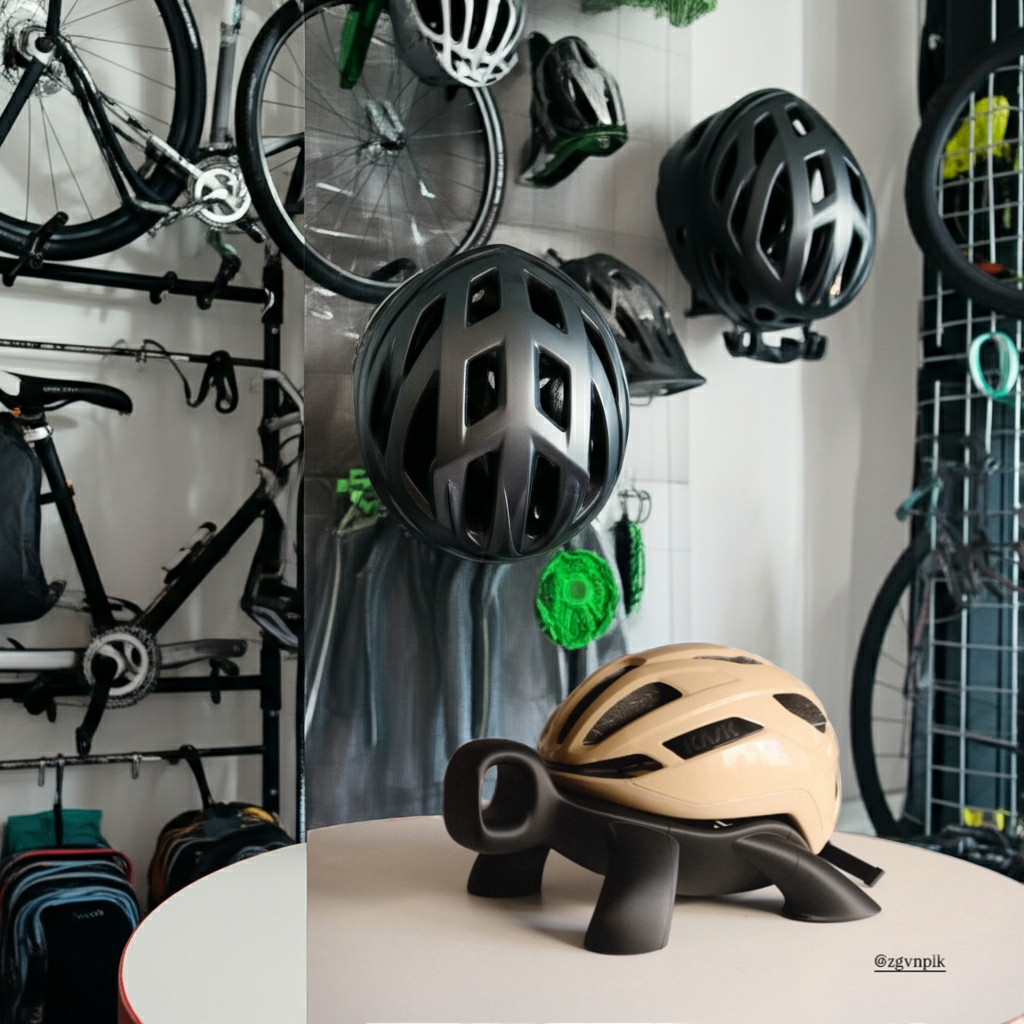
Dreaming3D's Turtles Bike Helmet Holder is our take on what a cycling helmet stand should be: functional enough to do the job properly, durable enough to do it every day, and fun enough that you actually want it in your space. The turtle motif is not random — turtles carry their protective shells everywhere they go. It is the right animal for a helmet holder.
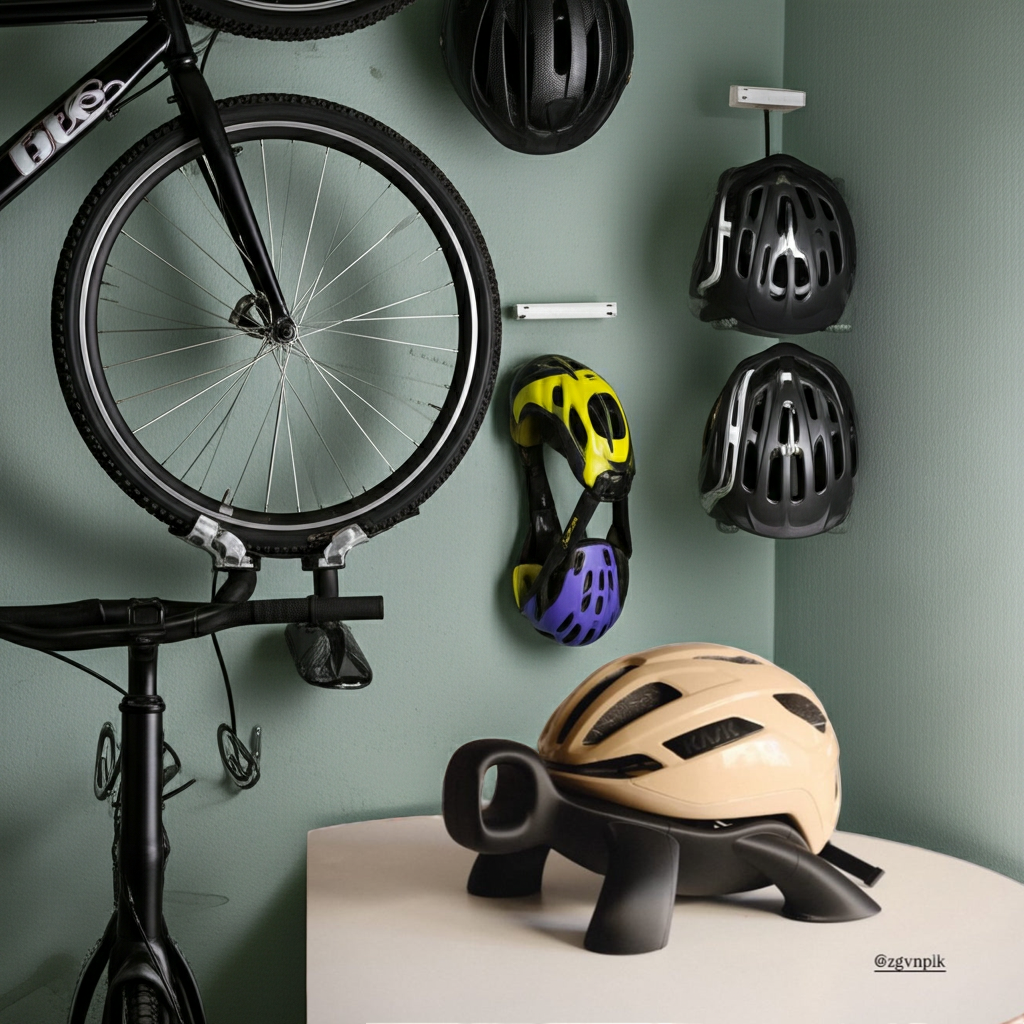
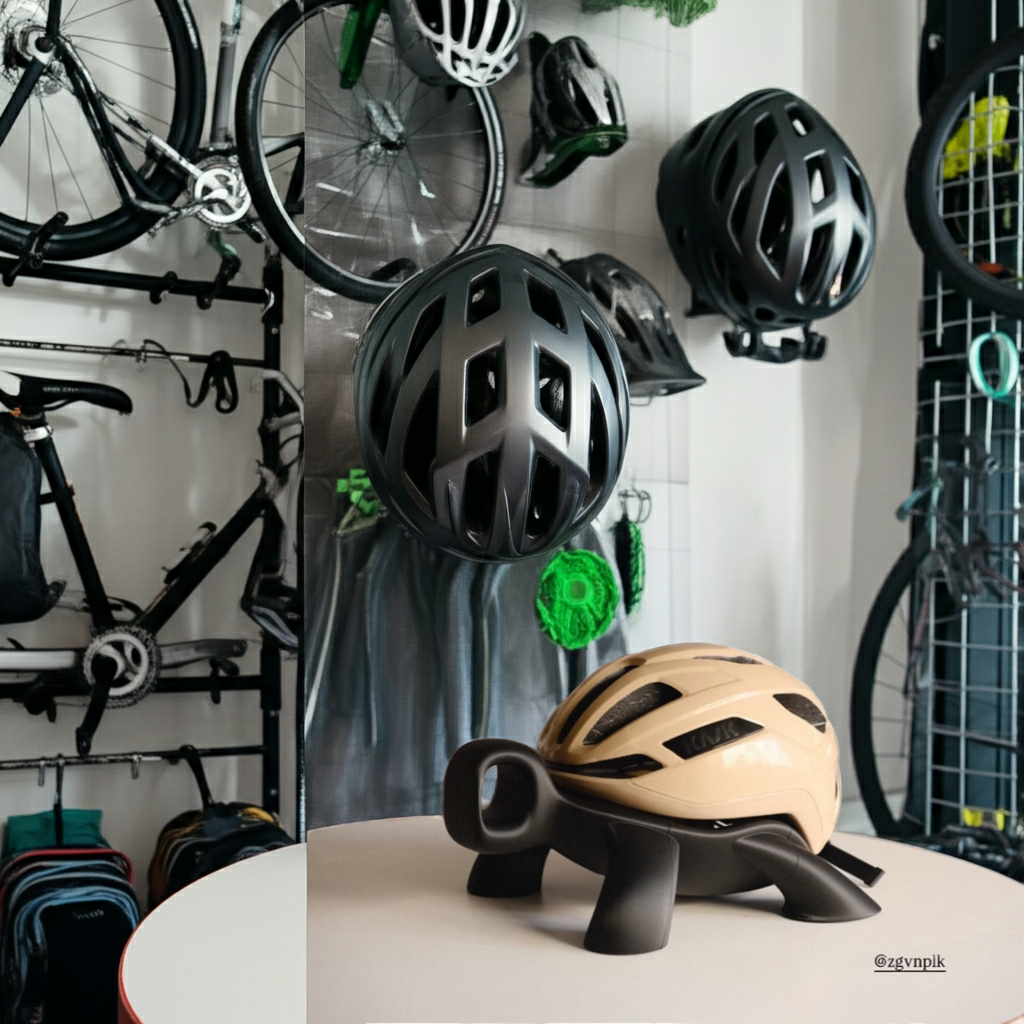
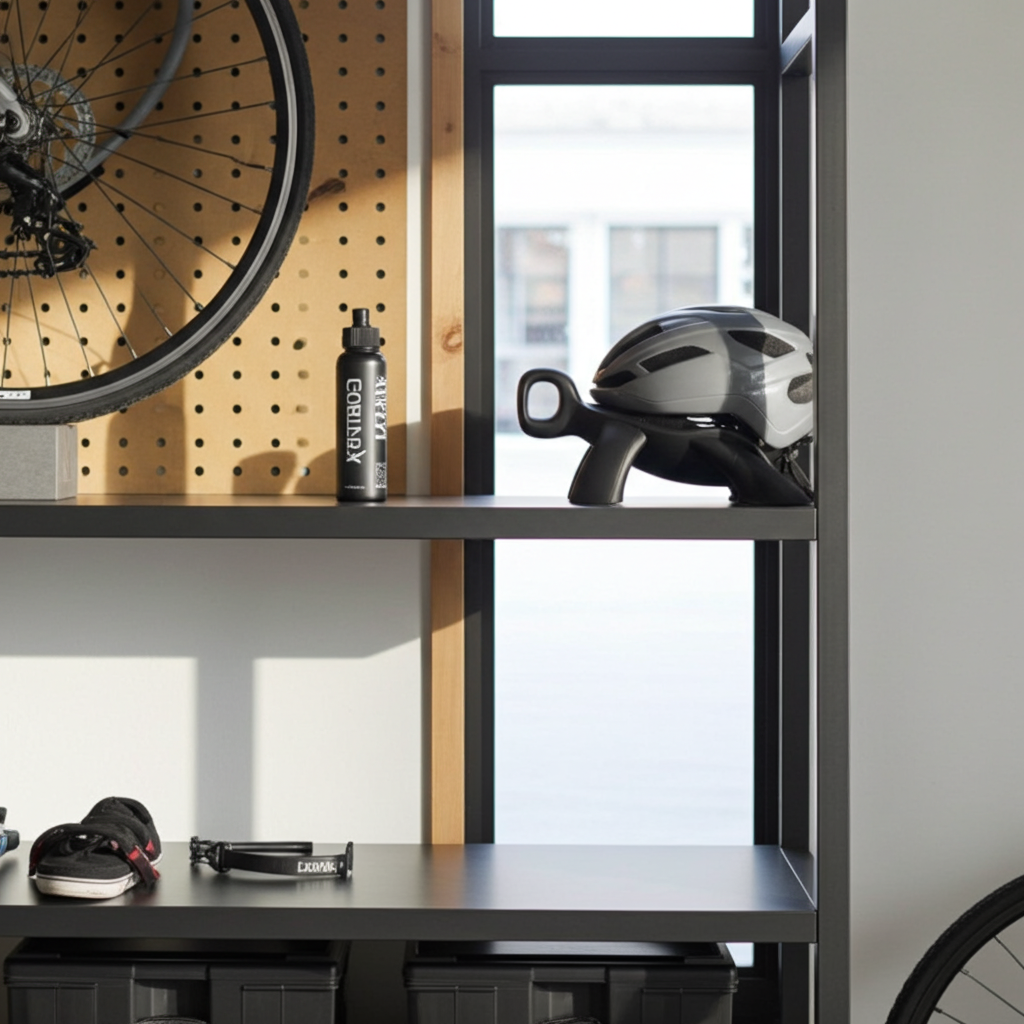
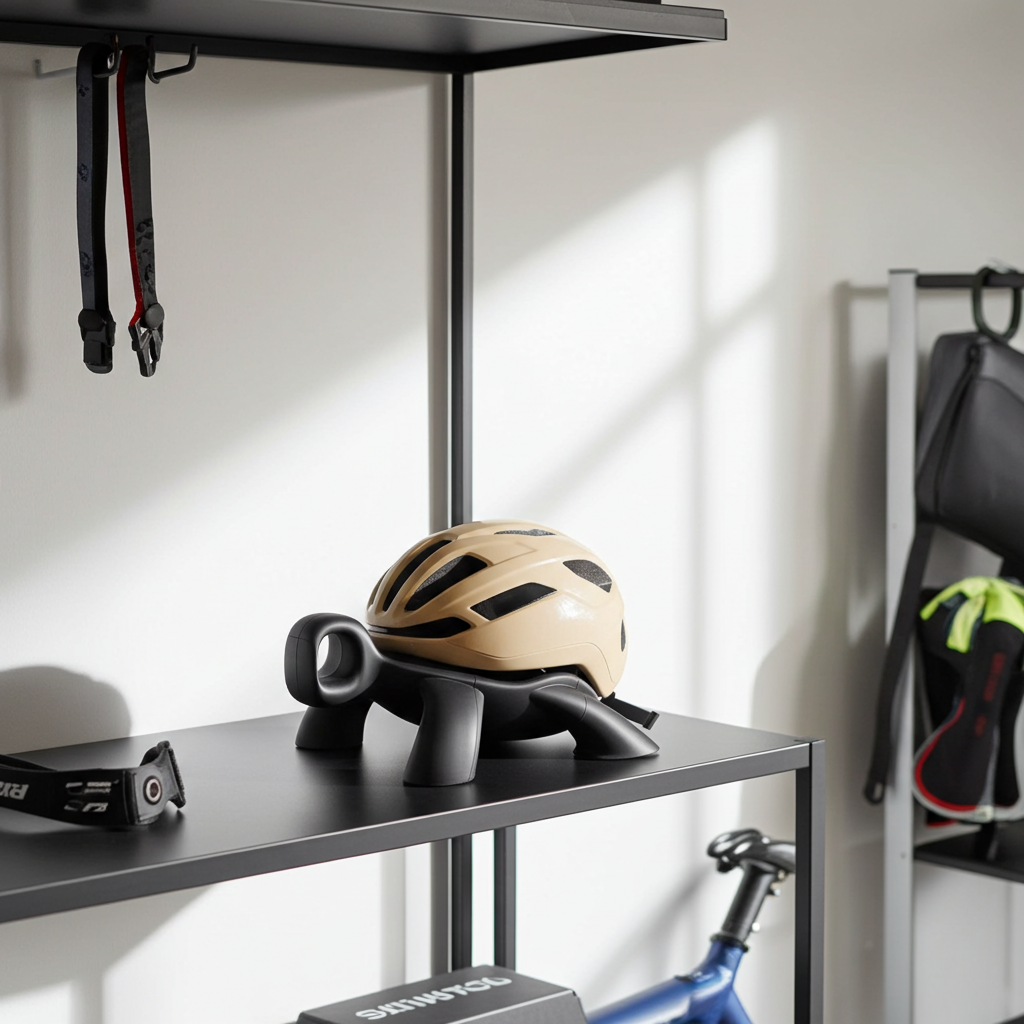
Turtles Bike Helmet Holder
The 3D printed cycling helmet stand that actually belongs in your bike room. Made from high-quality PLA, designed to hold any standard bicycle helmet securely, and available in a range of colors to match your kit or your space.
- Playful turtle design with serious structural support for any standard bike helmet
- High-quality PLA construction — strong, lightweight, built for daily use
- 13 color options: White, Black, Red, Blue, Green, Navy, Purple, Pink, Orange, Gold, Beige, Gray, and Rainbow
- Perfect for garages, entryways, bike rooms, and mudrooms
- Each piece passes a 5-point quality inspection before shipping
- A thoughtful, functional gift for cyclists, triathletes, and commuters
Why a 3D Printed Helmet Holder?
The standard options for helmet storage — plastic hooks from a big-box store, a generic wall-mounted peg — do the job, but they are generic. They say nothing about who uses the space, what the space is for, or what the person who set it up cares about. A well-designed 3D printed helmet holder does something different: it tells a story about the space it is in and the person who put it there.
The Turtles Helmet Holder is printed in high-quality PLA that passes a 5-point inspection before shipping. It is sized to hold any standard bicycle helmet securely — no tipping, no wobbling. It works equally well in a garage, an entryway, a dedicated bike room, or at a cycling studio. The 13 color options mean you can match it to your kit, your partner's kit, your bike, or whatever color happens to make you happy.
For cyclists who are also cyclists' families — partners, kids, parents who ride — a helmet holder that is also a conversation piece solves the functional problem while adding personality to a space that often desperately needs it. Garages full of bike gear can look chaotic; a little intentional design goes a long way.
Looking for a gift for the cyclist in your life? The Turtles Bike Helmet Holder ships from San Diego and makes a genuinely useful, genuinely distinctive gift for any rider. Order yours at dreaming3d.net →
Where 3D Printing
Takes Cycling Next
The current trajectory of 3D printing in cycling is accelerating in every direction simultaneously. At the top level, the combination of continuous fiber printing and AI-driven structural optimization is moving toward mass customization of full carbon frames — where each frame is designed and printed for a specific rider's geometry, weight, riding style, and power output rather than selected from S/M/L/XL size runs.
The helmet category — currently dominated by injection-molded ABS shells with expanded polystyrene liners — is an area where 3D printing is starting to have a meaningful impact. Lattice-structure printing using TPU allows for energy-absorbing inner liners that are mechanically superior to EPS foam and can be tuned to a rider's specific head geometry. Several helmet companies are prototyping and in some cases producing small runs of 3D-printed lattice liners that outperform traditional materials in impact testing.
Custom shoe fabrication is another frontier: the interaction between shoe sole stiffness, cleat position, and foot anatomy is complex, and mass-produced cycling shoes make compromises that fit no one perfectly. 3D printing of custom insoles, cleat adapters, and eventually shoe uppers and midsoles is an active research and commercial development area. The same pattern that drove custom saddle technology — scan, model, print, fit — is being applied to footwear.
At the everyday community level, the growth of shared design repositories means that the catalog of printable cycling accessories is expanding faster than any single brand could produce. Every week, new designs for mounts, holders, brackets, and organizers are shared freely. The ecosystem of locally printed, personally designed cycling gear — accessible to anyone with a printer or access to a printing service — is already a meaningful part of how engaged cyclists configure their setups.
San Diego cyclists take note: Dreaming3D offers custom FDM and resin printing for cycling accessories of all kinds. Have a specific mount, bracket, or storage solution you need that does not exist as a commercial product? Contact us about custom design and printing — we serve the entire San Diego area and can typically turn around custom print requests within 48 hours.
Frequently Asked Questions
Carbon-infused PLA (PLA-CF) is a composite filament made by blending chopped carbon fiber strands into a standard PLA base. The result is significantly stiffer, more dimensionally stable, and better looking than regular PLA — with a characteristic matte black finish that hides layer lines. It requires a hardened steel nozzle (carbon fiber is abrasive to brass nozzles) but prints at similar temperatures to standard PLA, making it accessible on most FDM printers including Bambu Lab, Prusa, and Creality machines.
For the right parts, yes. Carbon-infused PLA and nylon-based composites are strong enough for mounts, brackets, cable guides, accessories, and gear storage. For safety-critical structural components — frames, stems, handlebar clamps — you need professional-grade continuous fiber composites or metal AM processes. The cycling community has developed a good instinct for which parts are appropriate for 3D printing and which are not. When in doubt, if it is a part you rely on not to fail while descending at 40mph, it should be made from verified commercial materials.
Directly from Dreaming3D at dreaming3d.net/products/turtles-helmet-holder. It is available in 13 colors — White, Black, Red, Blue, Green, Navy, Purple, Pink, Orange, Gold, Beige, Gray, and Rainbow — starting at $39.99. Each piece is 3D printed in high-quality PLA and passes a 5-point inspection before shipping. Call us at 858-342-6984 if you have questions about colors or sizing.
Dreaming3D in San Diego offers FDM and resin 3D printing for custom cycling accessories, mounts, brackets, and gear storage solutions. We can print from your design files or help design a custom piece if you have a specific need. We also carry printed products like the Turtles Bike Helmet Holder ready to ship. Contact us at dreaming3dprinting@gmail.com or call 858-342-6984 to discuss your project.
For most cycling accessories — mounts, holders, brackets, and gear storage — carbon-infused PLA is the best balance of stiffness, printability, and surface finish. For parts that might see heat (inside a car on a summer day, near a disc brake rotor), PETG or ABS provides better heat resistance. For flexible components like cable guides or grip overlays, TPU is the right choice. For the highest strength-to-weight ratio in a desktop filament, carbon fiber nylon (PA-CF) outperforms PLA-CF but requires higher print temperatures and more careful moisture management.
It is one of the better cycling gifts precisely because it is both functional and fun. Every cyclist needs somewhere to put their helmet — and most of them are putting it somewhere that is not ideal. The Turtles Helmet Holder solves the problem with personality. Available in 13 colors, it is easy to pick something that matches the recipient's bike or style. At $39.99 to $69.99 depending on color, it is in the sweet spot for a thoughtful gift. Order at dreaming3d.net/products/turtles-helmet-holder.
Gear Up.
Print On.
From carbon-fiber components to the helmet holder your garage has been missing — Dreaming3D in San Diego builds the cycling accessories that matter.